· product · 7 min read
Introducing Kelvin Intelligence: AI-Powered Legal Market Data
Kelvin Intelligence provides continuously updated data on 33K+ organizations, 277K+ legal professionals, 1.1M+ practice area classifications, and 312K+ SEC filings through API access and data feeds.

Michael Bommarito
CEO, 273 Ventures
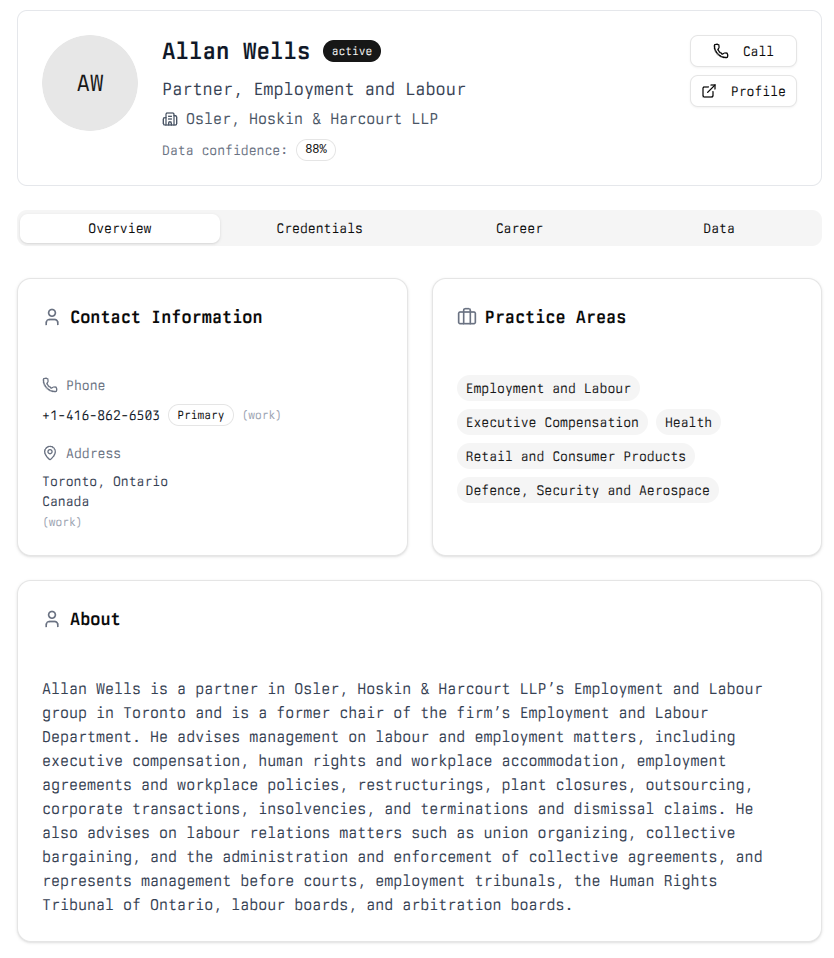
The Problem: Legal Market Intelligence Is Fragmented
If you have ever tried to answer a seemingly simple question about the legal market (Which firms are growing their litigation practices in the Southern District of New York? Which partners moved firms in the last quarter? What is the average headcount trajectory for midsize IP boutiques?), you know the frustration.
Legal market data is scattered across dozens of sources: state bar records, court filing systems, firm websites, press releases, regulatory filings, LinkedIn profiles, and proprietary databases that are expensive, incomplete, or both. Assembling a coherent picture of any market segment requires manual effort that does not scale, data that goes stale quickly, and analytical methods that have not evolved in decades.
The legal industry spends billions of dollars annually on business development, competitive intelligence, outside counsel selection, and recruiting. Yet the data infrastructure supporting these decisions is remarkably primitive compared to what exists in other professional services markets.
We built Kelvin Intelligence to change that.
What Kelvin Intelligence Provides
Kelvin Intelligence (KLI) is a continuously updated database of legal market entities: organizations, law firms, legal professionals, and the relationships between them. It is built through AI-powered data pipelines that extract, normalize, and enrich information from public and proprietary sources.
The Data
The current KLI database includes:
- 33,000+ organizations across the legal services market: 27K law firms, 4K corporations, 550+ government entities, 240+ bar associations, 78 courts, and more
- 277,000+ legal professional profiles with 508K+ court and bar admissions (57% state/territory, 40% federal courts, 3% international), 524K+ education records, 1.1M+ practice area classifications, 274K+ biographies, and 186K+ verified emails
- 33,000+ tracked domains with 2M+ pages crawled, 5M+ page snapshots, and 867K+ profile data extractions
- 312,000+ SEC/EDGAR filings analyzed with 8.8M+ documents indexed, 53K+ law firm mentions extracted and matched to organizations at 88% resolution
This is not a static directory. KLI data is continuously updated through automated pipelines that monitor source data, detect changes, and propagate updates across the database. When an attorney changes firms, when a practice group opens a new office, when a firm merges or dissolves, KLI captures these events as they become visible in public records and professional disclosures.
Market Coverage: The Full Pyramid
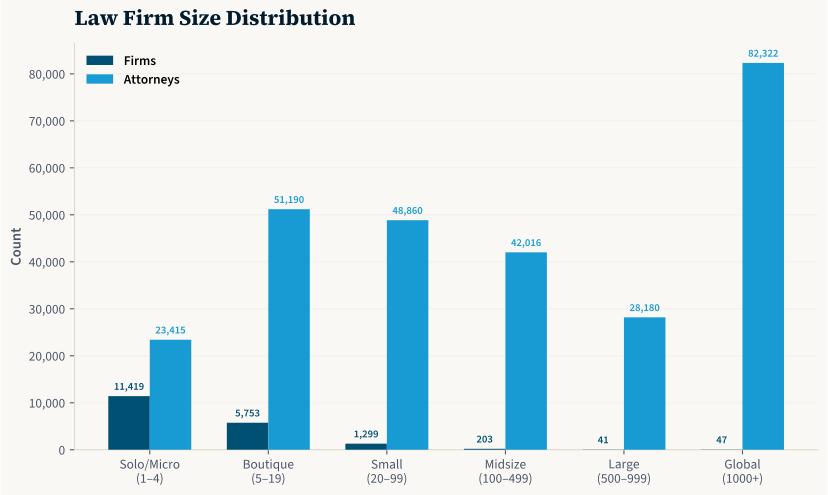
Most market intelligence products focus on the AmLaw 100. KLI covers the full pyramid: 47 global firms account for 82K attorneys, but 18,000+ smaller firms employ 165K more.
Geographic Reach
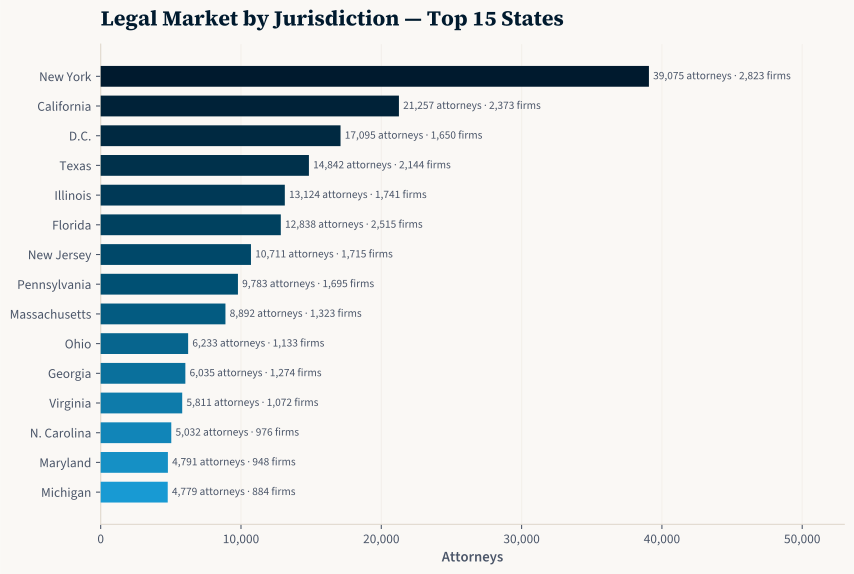
KLI maps the legal market across every U.S. state and federal jurisdiction. New York leads with 39K attorneys across 2,800+ firms. Florida has more firms (2,515) than any state except New York and California, but fewer attorneys per firm: a market dominated by smaller practices.
Practice Area Intelligence
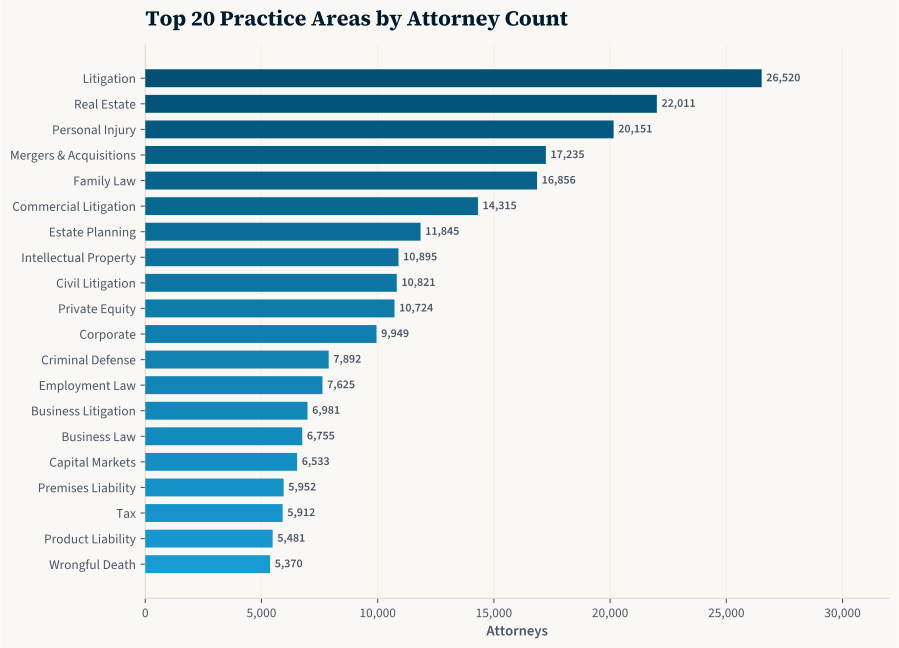
KLI classifies attorneys by actual activity, not self-reported specialties. With 1.1M+ practice area tags derived from court filings, published work, and deal involvement, you can answer questions like: “Which firms have the deepest bench at the intersection of M&A and capital markets?”
Profile Depth
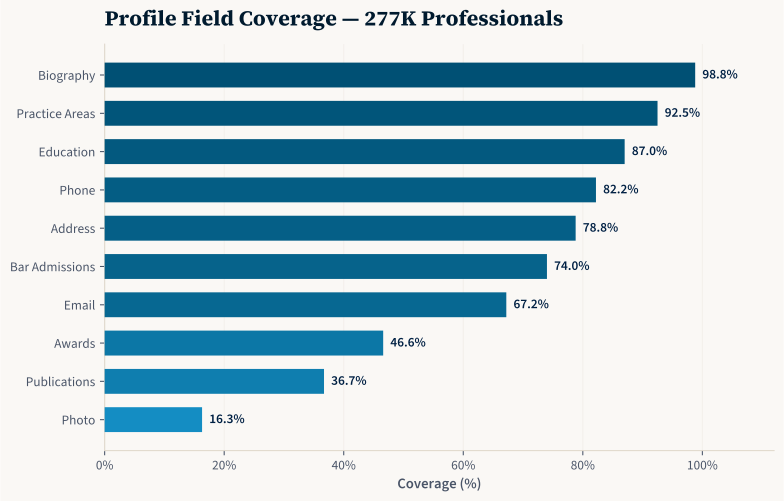
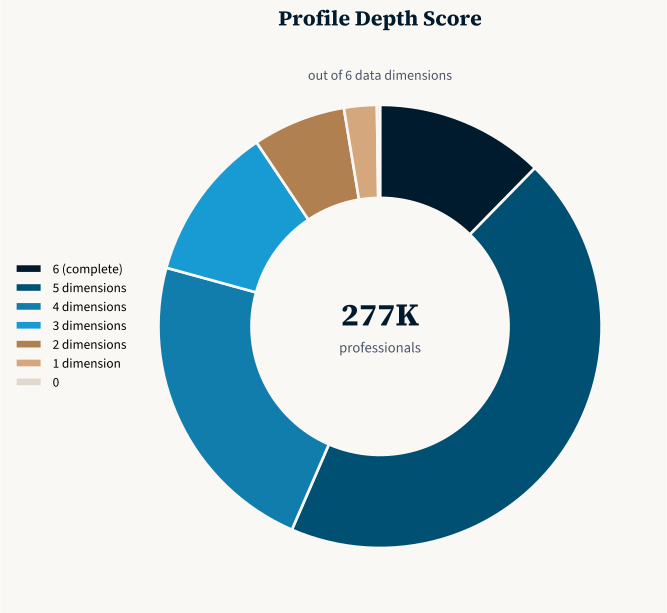
Nearly 99% of profiles include a biography, 92.5% have practice area classifications, and 87% have education records. 79% of professionals have four or more data dimensions filled.
Entity Resolution and Normalization
One of the hardest problems in legal market data is entity resolution: determining that “Smith & Jones LLP,” “Smith Jones,” “Smith & Jones, a Law Corporation,” and “S&J Legal” all refer to the same entity. Multiply this across hundreds of thousands of organizations and millions of references in court records, bar databases, and corporate filings, and you have a problem that manual curation cannot solve.
KLI uses AI-powered entity resolution to match, merge, and normalize entity references across sources. Our pipeline combines deterministic matching rules with learned models trained on legal entity data, achieving resolution accuracy that exceeds what any single source provides on its own.
AI-Enriched Profiles
Beyond aggregating raw data, KLI uses AI to enrich entity and professional profiles with derived attributes:
- Practice area classification based on actual activity (court filings, published work, deal involvement), not just self-reported specialties
- Firm positioning analysis that segments firms by size, practice mix, geographic focus, and market segment
- Career trajectory data that tracks professional movement across organizations, enabling trend analysis at the individual and market level
- Relationship mapping that identifies connections between professionals, organizations, and matters
SEC Filings: A Unique Data Source
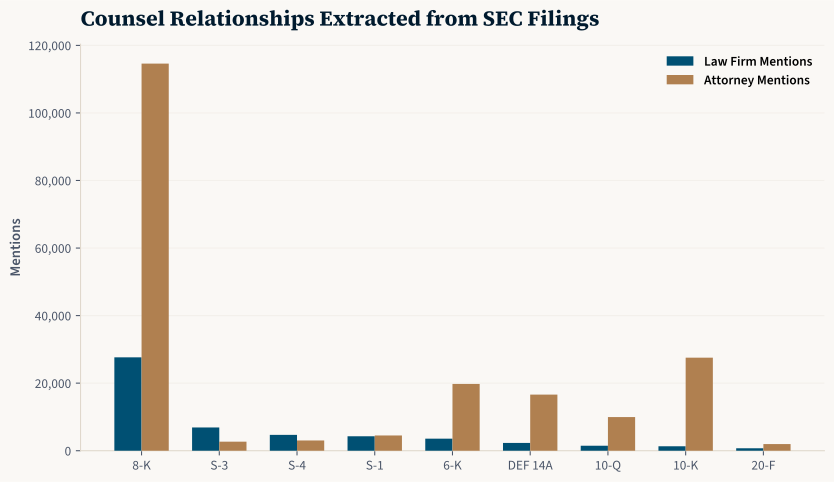
SEC filings disclose counsel relationships that are invisible in directories and bar records. KLI extracts and resolves these at scale: 53K+ law firm mentions matched to organizations at 88% resolution across 312K+ filings.
Career Seniority
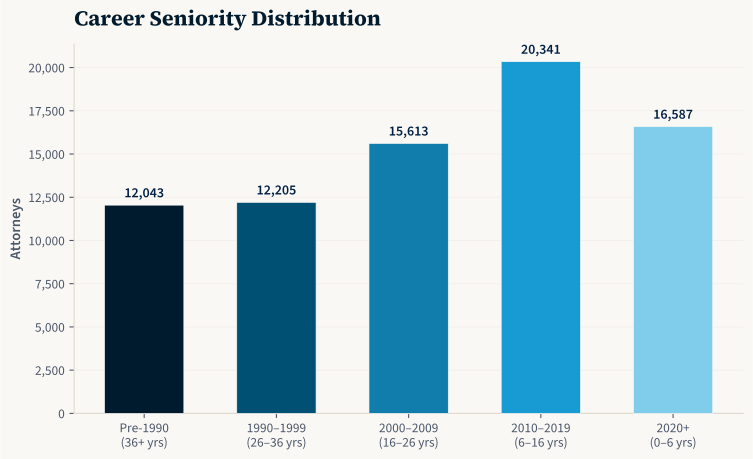
Among 76,789 attorneys with known admission years, the largest cohort is mid-career (6-16 years). These are the lateral candidates and rising leaders where market intelligence is most valuable.
Use Cases
KLI serves four primary use cases:
Competitive Intelligence
Law firm leadership and strategy teams use KLI to track competitor activity: lateral hires, office openings and closings, practice area expansion, and market positioning shifts. The data supports strategic planning with real-time visibility into market dynamics rather than quarterly reports based on surveys and self-reported data.
Outside Counsel Selection
Corporate legal departments and procurement teams use KLI to evaluate and select outside counsel based on objective data: actual practice experience in relevant jurisdictions and courts, team composition, historical staffing patterns, and market positioning. This replaces or supplements the traditional RFP process with data-driven analysis.
Recruiting and Lateral Hiring
Legal recruiting firms and law firm recruiting committees use KLI to identify potential lateral candidates based on practice area, jurisdiction, career trajectory, and organizational fit. The continuously updated professional profiles provide a living map of the lateral market.
Market Analysis and Business Development
Business development professionals use KLI to identify opportunities: organizations entering new markets, firms with gaps in coverage that create referral opportunities, and emerging practice areas where demand is outpacing supply. The data supports targeted outreach grounded in market reality rather than intuition.
How It Is Built
KLI is not a traditional database product built by armies of researchers manually entering data. It is a modern data pipeline that uses AI at every stage:
-
Source Monitoring: Automated systems continuously monitor public data sources including court electronic filing systems, state bar databases, SEC filings, patent office records, and organizational websites.
-
Extraction: AI-powered extraction identifies structured data within unstructured sources, including names, roles, organizations, dates, practice areas, and relationships embedded in documents, filings, and web pages.
-
Normalization: Entity resolution pipelines match extracted data against the existing knowledge base, resolving ambiguities and merging records that refer to the same real-world entity.
-
Enrichment: Derived attributes are computed from aggregated data, including practice area classifications, organizational profiles, relationship graphs, and trend indicators.
-
Quality Assurance: Automated validation checks flag anomalies, inconsistencies, and potential errors for review. Confidence scores accompany all derived attributes.
This pipeline runs continuously, meaning KLI data reflects the current state of the legal market, not a point-in-time snapshot that ages from the moment it is published.
How It Is Delivered
KLI is available through three delivery mechanisms:
API Access
The KLI API provides programmatic access to the full database through 86+ endpoints covering entity search, profile retrieval, relationship queries, and analytical functions. The API is designed for integration into existing business intelligence tools, CRM systems, and agentic AI workflows.
All endpoints return structured JSON with consistent schemas, comprehensive documentation, and rate limits appropriate for production use. Authentication uses API keys with granular permission controls.
Data Feeds
For organizations that need bulk access or want to integrate KLI data into their own data warehouse or analytics platform, we provide structured data feeds with configurable update frequencies. Feeds are available in standard formats (JSON, CSV, Parquet) and can be filtered by entity type, jurisdiction, practice area, or other criteria.
Custom Reports
For specific analytical needs (market entry analysis, competitive benchmarking, lateral market studies), our team produces custom reports that combine KLI data with expert analysis. These reports are designed for executive audiences and strategic planning processes.
Request Access
Kelvin Intelligence is available now to qualified organizations. Access is structured to match your use case and scale requirements.
To learn more or request access, contact us at hello@273ventures.com.
The legal market deserves data infrastructure that matches the sophistication of the decisions it supports. Kelvin Intelligence delivers that infrastructure: continuously updated, AI-enriched, and designed for the way legal organizations actually work.